The Small Space Revolution: How Modern Lifestyles are Redefining the Concept of Home
In a vibrant, multicultural neighborhood in Brooklyn, within a 1920s townhouse, a 46-square-meter (500 sq. ft.) apartment is challenging the traditional notions of urban living,. This compact rental, home to designers Julia Kinska and Aram Kavinsky of Faride Interior Design Studio, serves as a living testament to a shifting global lifestyle: one where function, flexibility, and beauty take precedence over raw square footage.
The Versatility Mandate
As urban centers become more crowded, the modern resident is increasingly a “renter by necessity,” which brings a unique challenge: transience. “The biggest challenge when renting is knowing that it’s temporary,” explains Aram Kavinsky. Consequently, the modern home is no longer a static environment but a versatile collection of adaptable elements.
For Kinska and Kavinsky, this meant choosing open shelving solutions that can be reused in future apartments, regardless of varying dimensions. It also meant finding clever ways to maximize every inch, such as utilizing “hidden” storage spaces above shelves for luggage and seasonal items, ensuring the living area remains uncluttered and serene.
Zoning the “Multi-Hyphenate” Space
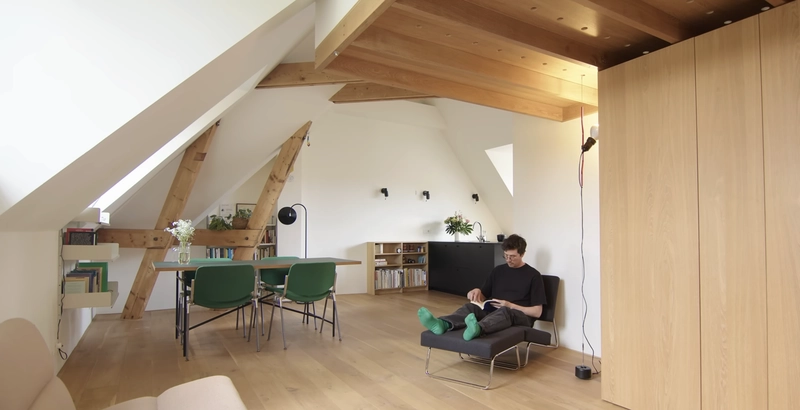
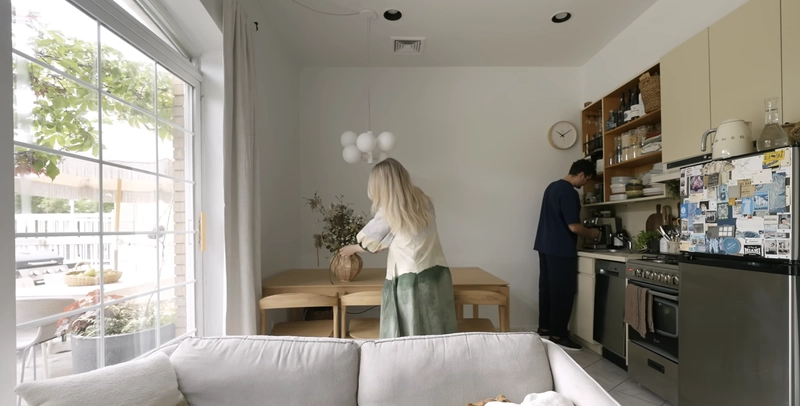
The traditional boundaries of “kitchen,” “office,” and “living room” are dissolving. In this Brooklyn home, the primary design goal was to merge these functions into a single multifunctional space.
• The Power of the Table: A large solid oak dining table serves as the heart of the home, functioning as a communal workspace for several people during the day and a social hub for meals at night.
• Visual Zoning: To avoid the “clutter” of a single room, the couple uses different wool rugs to subtly “zone out” the kitchen from the lounge without the need for physical walls.
• Flexible Working: The layout is intentionally designed so that work can happen anywhere—from a comfortable armchair to the sofa or the dining table—reflecting the modern “work from anywhere” culture,.
Nature as a Blueprint
Despite the concrete surroundings of New York City, modern dwellers are increasingly seeking a connection to nature (biophilic design) to find tranquility,. Kinska and Kavinsky incorporated many wooden objects, plants, and ceramics to make the space feel personal and comfortable.
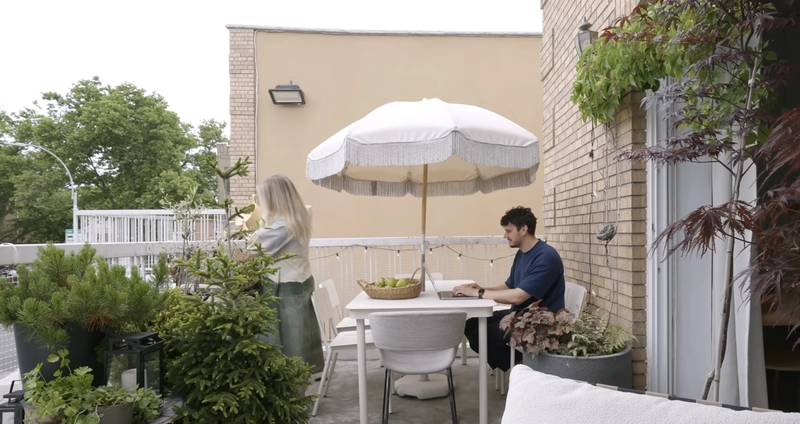
Perhaps the most striking feature of their home is the large balcony, a rarity in New York that the couple treats as a literal extension of their living space,. By dividing it into a lounge area and a dining zone that seats eight—complete with a barbecue—they have effectively added a “second kitchen and living room” under the open sky.
The Creative Renter’s License
Modern living is also about reclaiming agency in spaces we don’t own. The couple demonstrated how thoughtful, reversible changes can transform a rental’s mood:
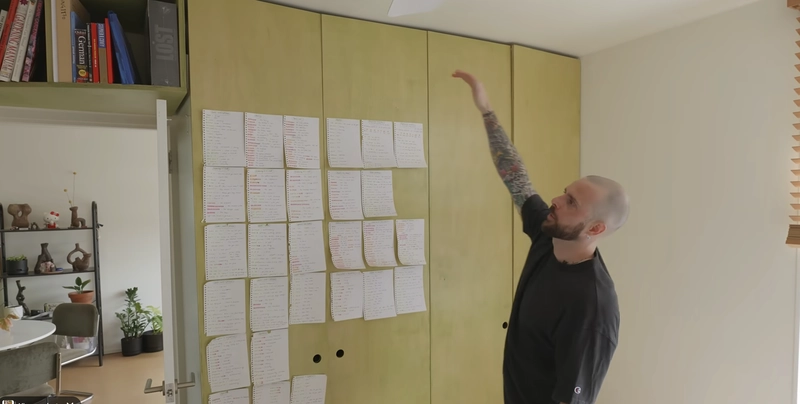
• Camouflage: They covered a stained wood pantry door—which they weren’t allowed to paint—with a collection of personal photos, turning a functional eyesore into a gallery-style picture frame.
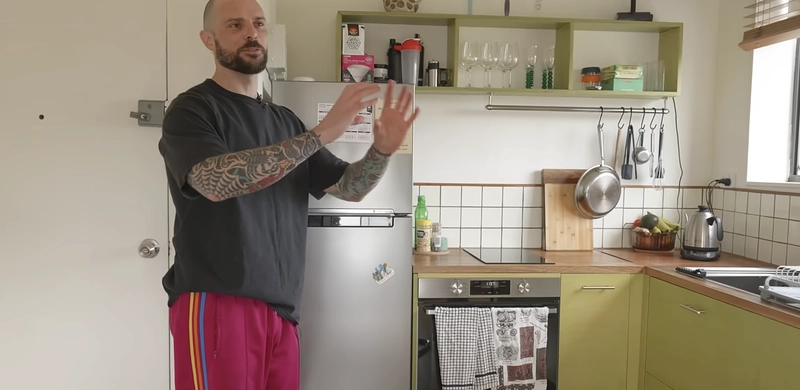
• Modification: In the kitchen, they removed cabinet doors to create an open-shelf feel that suits their love for cooking, while keeping the original doors to be reinstalled later.
• Negotiation: In the bathroom, they negotiated with their landlord to install a more functional medicine cabinet, proving that intentional design can benefit both the tenant’s comfort and the property’s value.
Conclusion
Ultimately, the modern home is no longer defined by its walls, but by how it supports the social life, work, and personal comfort of its inhabitants. As Kinska and Kavinsky’s Brooklyn rental shows, finding “poetry in the everyday” is not about the size of the floor plan, but the intentionality of the design,.