
The Architecture of Intention: Redefining Modern Living in Minimal Square Footage
As an architect, I view the challenge of modern urban living not as a limitation of space, but as an opportunity for the optimization of every square meter. Architecture is increasingly becoming a tool for “living lighter” and finding “poetry in the everyday,” driven by a determination to do things differently to provide both space and comfort. By analyzing a recent transformation of a 25-square-meter micro loft in Paris, we can see how spatial efficiency, material selection, and a connection to the environment coalesce to influence human well-being.
Spatial Efficiency: The Art of the Narrative Flow
In modern architecture, spatial efficiency is no longer just about storage; it is about reclaiming circulation space and creating multi-functional environments. In the Paris project, we replaced traditional, bulky mezzanine ladders with a unique, thin metal staircase designed to be a “sculpture” or a “piece of art” that occupies minimal room,.
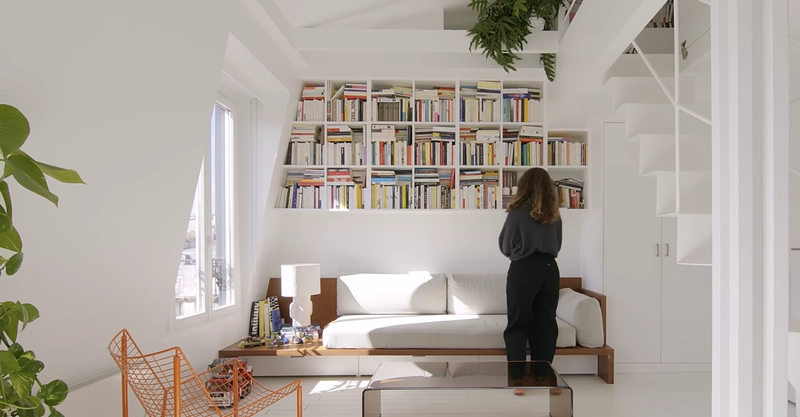
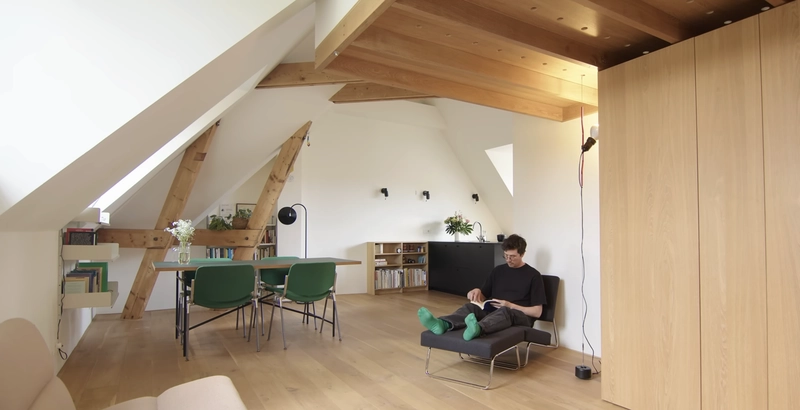
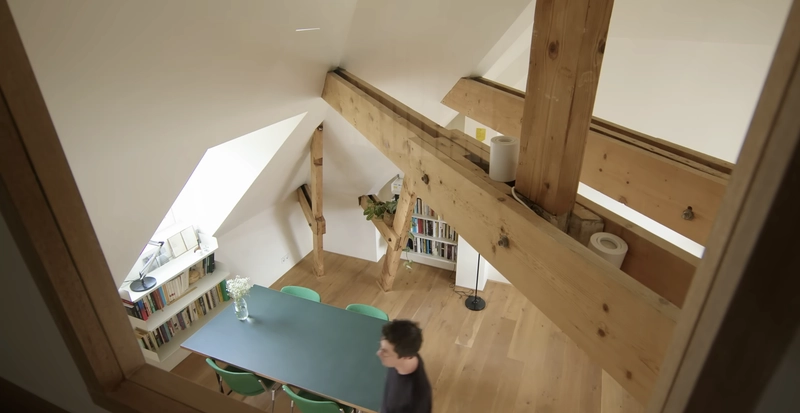
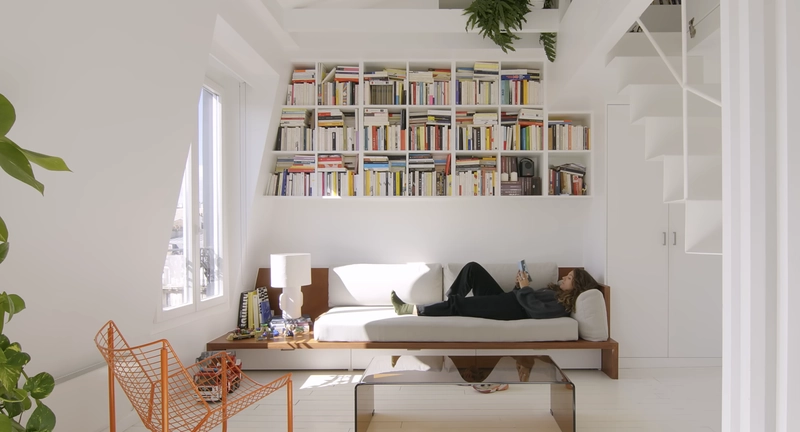
Efficiency also means questioning traditional furniture layouts. By removing a standard desk and replacing it with a large custom daybed made of birch plywood, the living area transforms from a workspace into a place for relaxation and guest accommodation,. Even the structural elements, such as the space between support beams, are utilized for bookshelves and plant displays, ensuring that no volume is wasted. This approach allows a small studio to evolve into a “quiet place” that accommodates the specific needs of its inhabitants—in this case, a book reviewer and his son.
Sustainable Materials: Blending Heritage with Modernity
A sustainable approach to modern architecture involves respecting existing structures and choosing materials that are both durable and aesthetically harmonious. In the Haussmann-era loft, we preserved the original ceramic fireplace and dark brown tiles, choosing to tint new birch plywood to a walnut look to match this existing historical palette.
Sustainability also extends to the thermal performance of the home. By replacing an old skylight with a larger, better-insulated version, the architecture ensures the living space remains “cool in summer and warm in winter,” reducing the energy footprint while providing rooftop access. The use of white on the floors and walls is another strategic choice; it maximizes natural light reflection, reducing the need for artificial lighting during the day,.
The Relationship Between Architecture and Nature
Modern living often feels disconnected from the natural world, but architecture can bridge this gap through visual and physical transparency. We prioritize highlighting views of the sky and rooftops to create a sense of openness. In the kitchen, a large mirrored splashback was installed specifically to reflect the light and the city views back into the room,.
Furthermore, the design invites the outside in by using furniture that “floats” in the space, such as a light, transparent round dining table that does not block the sunshine. The connection to nature is most profound in the mezzanine bedroom, where the oversized skylight offers an amazing view of Montmartre, turning the city’s skyline into a living mural for the inhabitant.
Conclusion: A Playful and Human-Centric Future
Ultimately, architecture influences modern living by considering the emotional needs of every family member. Whether it is creating a playful “Alice in Wonderland” nook for a child—complete with soundproof glass and a tiny door—or a “quiet place surrounded by books” for an adult, the goal remains the same,. We strive to create “wild and wonderful” spaces that invite us to “pause, ponder, and smile,” proving that even the smallest footprint can be a joyful urban sanctuary.