The Invisible Renovation: How Efficiency and DIY Spirit are Redefining the Modern Home
In the heart of Melbourne, a 42-square-meter “six-pack” brick apartment has become a masterclass in how modern lifestyles are reshaping our living spaces. Once a “drab” unit defined by landlord-grade gray carpets and oyster lights, it has been transformed by Sean, a sustainable buildings officer, into a high-performance sanctuary that prioritizes comfort and personality over sheer square footage.
The Rise of the “High-Performance” Small Home
For the modern dweller, luxury is increasingly being measured by internal climate rather than marble countertops. Sean’s renovation highlights a significant shift: investing in what is behind the walls. Despite a modest budget of approximately $22,000, Sean dedicated nearly one-third of his funds—roughly $7,000—to insulation and replastering.
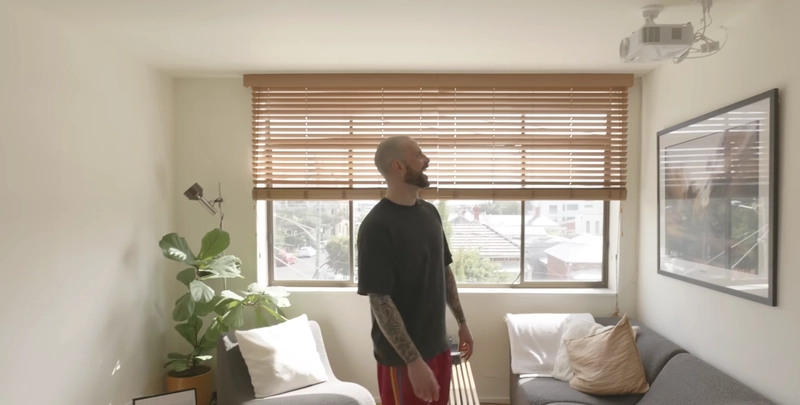
By installing R 3.5 “pink bats” in the ceiling and k17 rigid insulation boards on the north and west-facing walls, he effectively neutralized the “hot box” effect of the top-floor unit. The result is a home that maintains a steady 20°C year-round without the need for air conditioning or heating for 99% of the year. “It’s made a world of difference,” Sean notes, recalling a heatwave where the apartment stayed comfortable while temperatures outside soared.
The Circular Economy and the Marketplace Lifestyle
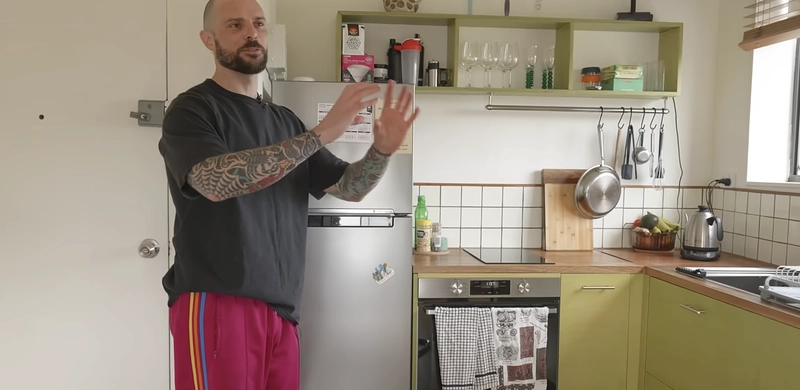
The modern home is no longer a showroom of brand-new furniture. Instead, it is a curated collection of the “found” and the “fixed.” Sean’s apartment is a testament to the circular economy, with almost every major piece—from the fridge and the round tulip dining table to the fluted glass bathroom door—sourced from Facebook Marketplace.
To manage costs and waste, Sean utilized:
• A Tool Library: Paying an $85 annual subscription allowed him to borrow every necessary tool for the renovation, meaning he only had to own a single drill.
• Upcycled Materials: He chopped an old hollow-core door in half to create a workspace and used flooring off-cuts to build shelves.
• Sustainable Materials: He opted for “Ready Cork” tiles, a natural, regenerative material that provides both acoustic and thermal insulation.
The Integration of Tech and Art
As living spaces shrink, furniture must work harder. The modern lifestyle demands technology that blends into the decor rather than dominating it. Sean replaced the traditional bulky TV cabinet with a ceiling-mounted projector, freeing up floor space.
Even the audio system serves a dual purpose. He utilizes the Samsung Music Frame, a premium speaker designed to look like a minimalist picture frame. This allows him to display personal photography—such as a shot taken in New York—while enjoying immersive Dolby Atmos sound. This “blended” approach to technology ensures that a 40-square-meter space feels like a home, not an electronics store.
The “95%” Perfectionist
Perhaps the most narrative shift in modern living is the move away from professional “perfection” toward the authenticity of the DIY process. Sean learned his skills via YouTube tutorials and the help of friends and family, such as his 70-year-old father who assisted with tiling and waterproofing.
Sean admits that the process taught him he isn’t a total perfectionist, opting to send the project at “95%” completion rather than obsessing over minor flaws, like a tiny dent in a tap or a bit of lingering paint on a handle. This “can-do” attitude reflects a broader cultural movement where the journey of building a home is as valued as the final product.
Ultimately, Sean’s Melbourne flat suggests that the future of housing isn’t about more space; it’s about smarter space. By focusing on thermal efficiency, reclaimed materials, and multi-functional technology, the modern home becomes a tailor-made suit: perfectly fitted to the owner’s life and values.