Maximizing Space and Light: An Amsterdam Attic Conversion
When we first stepped into the attic of this 1924 social housing complex in Amsterdam East, it was nothing but a bare shell—a skeleton of central walls and ancient wooden construction beams. But where others might have seen a cramped, forgotten corner of a building, I saw a canvas. As a woman, a partner, and a creator, my dream was to weave a sanctuary that didn’t just house my family, but held us. I wanted a space that felt calm and quiet, a place to recharge and celebrate the small, sacred social activities of our daily lives.
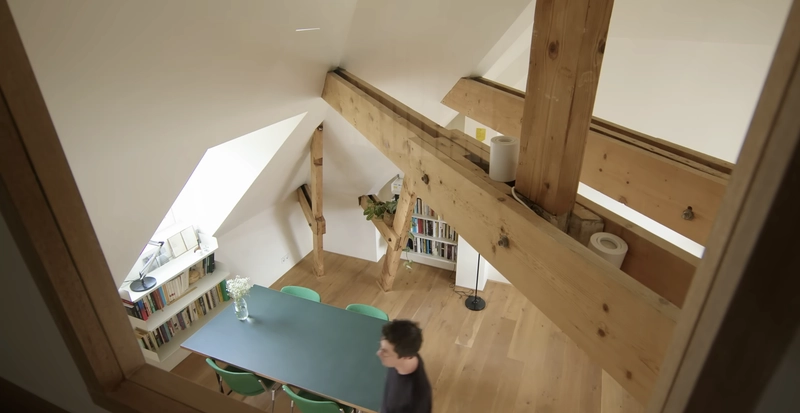
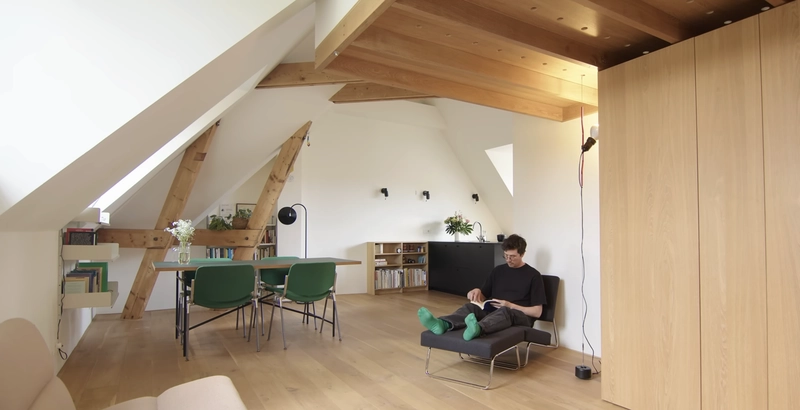
The creative process began with a deep listening to the building itself. I was captivated by the geometry of the roof and the way the natural light spilled across the original timber. We decided to keep the heart of the home as open as possible, choosing minimalist and modernist designs to create a sense of timelessness. One of my favorite concepts was the idea of making furniture “float” above the ground; by keeping the floor lines clear, we allowed the space to breathe, tricking the eye into seeing more than the 60 square meters we actually owned.
There is a specific kind of intimacy found in a small home. I remember the meticulousness of designing the bathroom, searching online until I found 60-year-old tiles from a French factory. Using them for both the walls and the floor created a minimal, unified composition that felt grounded and tactile. In the main living area, the height of the 5-meter ceilings allowed us to create a mezzanine bedroom that “burrows” under the rooftop—a secret nest for us to retreat to at night. Looking down from the steel balustrade, I can watch the light shift through the 2.6-meter-high dormer windows, feeling both connected to the world below and safely tucked away.
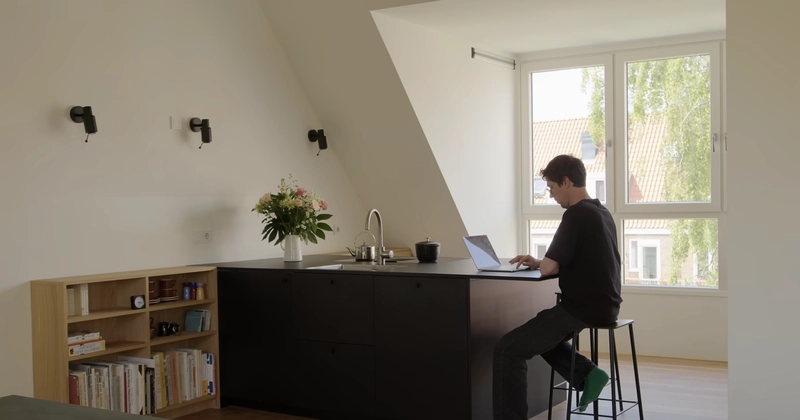
Functionality, for me, is an act of love. I designed our kitchen block to be more than just a place to cook; it is a soft transition into our living space, featuring an oak-veneered cabinet for our books and an overhang where we can work or share a meal together. Every corner has a story of transformation. What is now our son’s nursery was once my office; now, it is a cozy refuge where we purposefully avoided a bed frame to maintain a sense of openness for him to play.
Living here has taught me that abundance isn’t about square footage; it’s about intentionality. We have hidden cupboards under the stairs with “secret shelves” for our most personal items, ensuring the visual clutter never crowds our thoughts. On the sofa, tucked under the lower ceiling of the mezzanine, I often feel a sense of being “embraced”—a physical manifestation of the comfort we sought to build.
In the end, this project was about making choices based on what matters most. By choosing light, natural materials like oak and linoleum, and a layout that prioritizes communal joy over individual isolation, we turned a tiny attic into a boundless home.