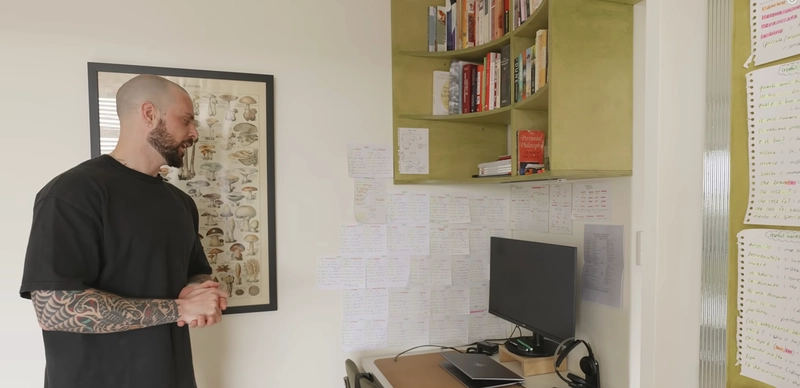
Sean’s Sustainable DIY Small Apartment Renovation
This DIY renovation of a 42-square-meter apartment in Melbourne showcases how a limited budget combined with a “can-do” attitude and sustainable practices can transform a “drab” space into a personalized home. The owner, Sean, a sustainable buildings officer, completed the project with a budget of approximately $20,000 to $22,000 over the course of six months.
The DIY Philosophy and Budget Management
To keep costs low, Sean performed the majority of the labor himself, learning skills through YouTube tutorials and receiving help from friends and family. He managed his tool expenses by paying an $85 annual subscription to a local tool library rather than purchasing expensive equipment he might only use once. Essential trades, such as electricians and plumbers, were the only professionals he paid for, while his father assisted with complex tasks like bathroom waterproofing and tiling.
Sustainability and Energy Efficiency
A significant portion of the budget—roughly one-third ($7,000)—was dedicated specifically to insulation and replastering. This included:
• Ceiling Insulation: Installing “pink bats” (R 3.5) after skinning off the old plaster.• Wall Insulation: Using coolm k17 board, which features rigid insulation and a plasterboard finish, on the north and west-facing brick walls.
• Sustainable Flooring: Sean installed “Ready Cork” tiles, chosen for their acoustic insulation, thermal properties, and status as a natural, regenerative material.
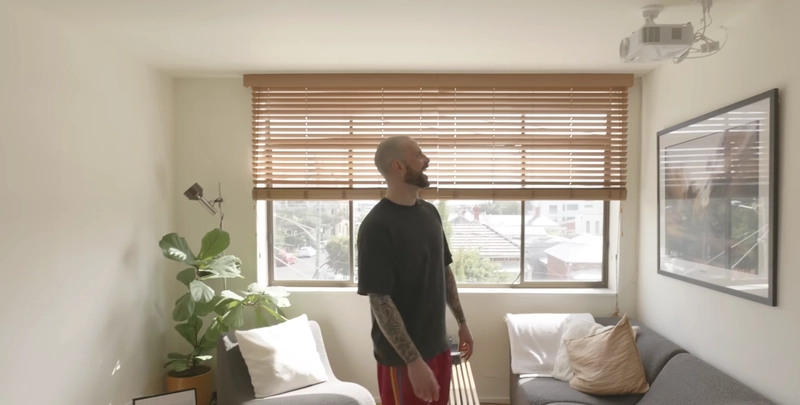
These upgrades significantly improved the apartment’s performance, maintaining an average internal temperature of 20°C without the need for air conditioning or heating for most of the year.
Creative Material Use and Second-Hand Finds
The renovation relied heavily on reclaiming materials and purchasing items from Facebook Marketplace:
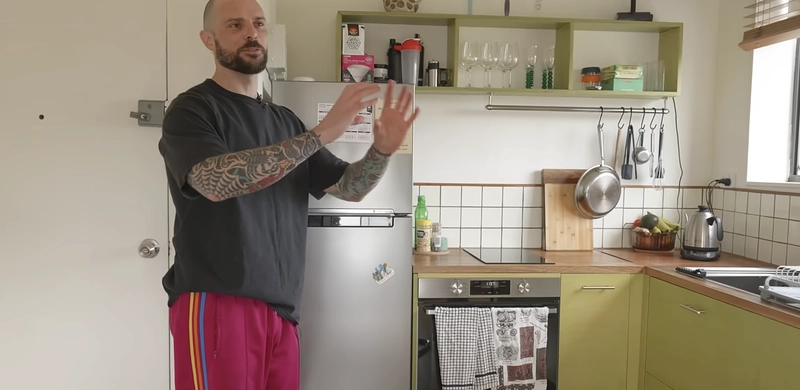
• Kitchen & Storage: Sean used Ikea cabinet frames but customized them with premium birch plywood fronts cut to size by a professional service (PCO) and stained a “pistachio green”. The benchtop was made from recycled and reclaimed timber.
• Furniture: Most major items, including the fridge, the round tulip dining table, chairs, and even a fluted glass door, were second-hand Marketplace finds.
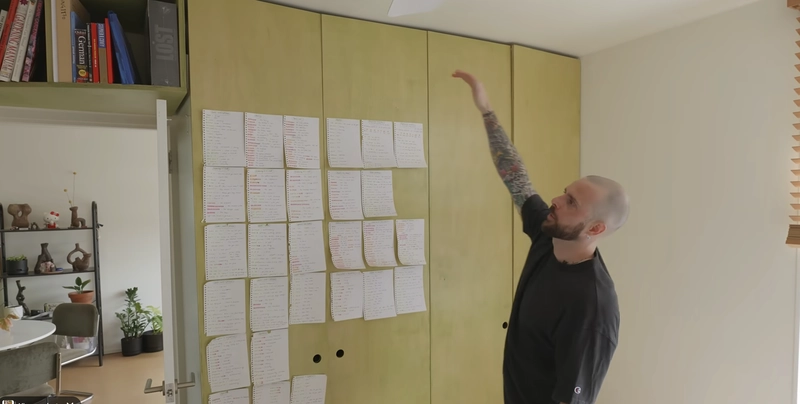
• Repurposing: He created a workspace by cutting an old hollow-core door in half to serve as a desk.
Technology and Aesthetics
To maintain a minimalist look while adding personality, Sean integrated versatile technology:
• Samsung Music Frame: This device serves as both a premium speaker and a customizable picture frame, allowing Sean to easily swap out personal photography.
• Home Cinema: Instead of a bulky TV and cabinet, he opted for a ceiling-mounted projector to save space in the living area.
• Monitoring: He uses a temperature and humidity tracker that sends live data to his phone, allowing him to monitor the efficiency of his insulation efforts.
Sean’s approach suggests that a successful renovation is like assembling a complex puzzle where some pieces are found, some are handmade, and the most important ones—like insulation—are hidden behind the scenes to hold everything together.