The New Horizon: How Small Spaces are Redefining Big Living
In the heart of Amsterdam’s East neighborhood, inside a 1924 social housing complex, a transformation is taking place that reflects a global shift in how we perceive the “home.” As urban centers become more crowded, the traditional dream of sprawling suburban acreage is being traded for intentional, compact, and highly functional living spaces.
A Sanctuary in Sixty Square Meters
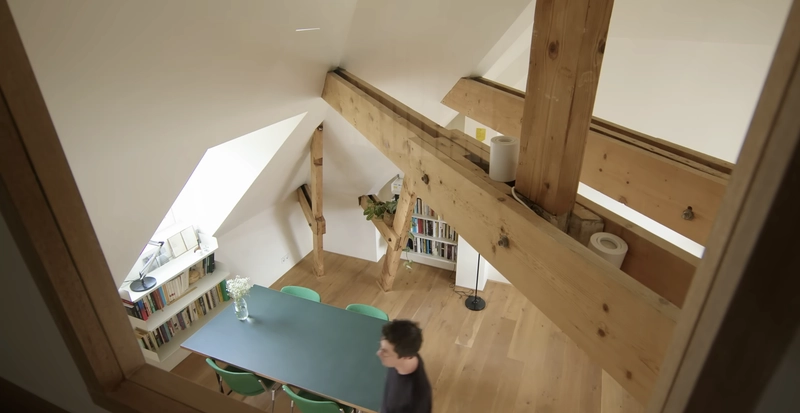
For visual artist and interior designer Mikil Hbr, the challenge was to turn a 60-square-meter (645-square-foot) attic shell into a sanctuary for a family of three,. “I designed this apartment around my family,” Hbr explains, noting that the goal was to maintain a spacious feeling while celebrating “family and small social activities”. This reflects a growing trend where homeowners prioritize quality of atmosphere—calm, quiet, and light—over sheer square footage.
The Amsterdam apartment utilizes its 5-meter-high ceilings to create a mezzanine bedroom, effectively “burrowing” the sleeping quarters under the rooftop to leave the main floor open for living,. By keeping the bedroom and nursery “small and cozy,” the designers were able to maximize the openness of the communal areas.
The Architecture of Psychology
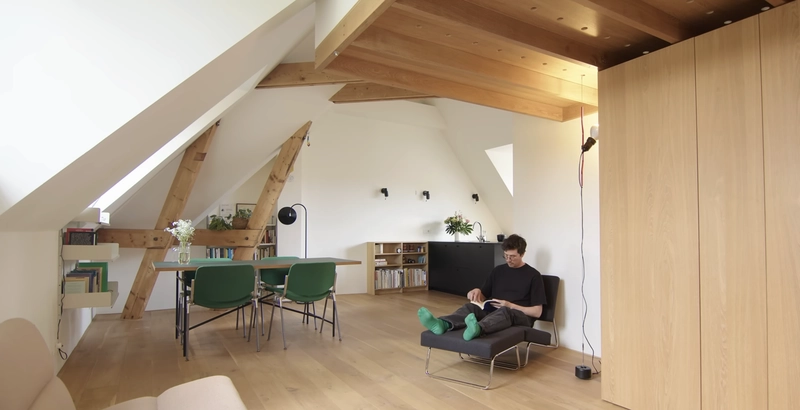
Modern living is increasingly about the psychological impact of design. In Hbr’s project, a key strategy was to have furniture pieces “float” above the ground. This minimalist choice isn’t just aesthetic; it serves to make the floor seem larger by keeping the sightlines clear.
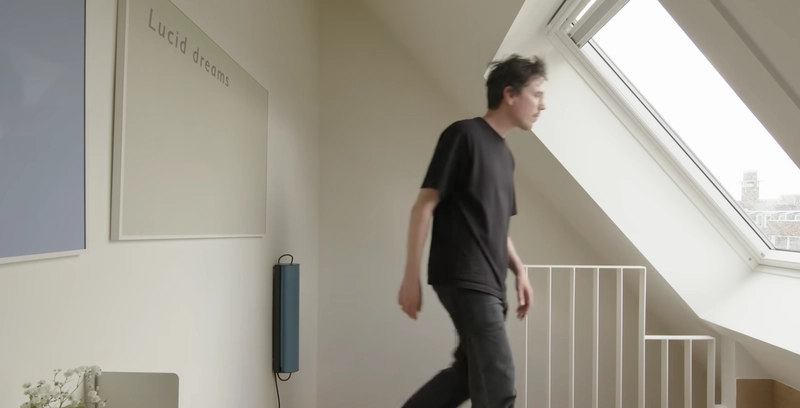
Light also plays a critical role in preventing small spaces from feeling claustrophobic. The apartment features 2.6-meter-high dormer windows and a mezzanine level designed with an open steel balustrade to ensure natural light reaches every corner,. Even the bathroom, a typically cramped area, was designed as a “calm and minimal composition” with a large window to provide plenty of light during the day,.
Multi-functionality as a Standard
As lifestyles blur the lines between work and home, furniture is being forced to work harder. In this contemporary attic, the kitchen block is not just for meal prep; it features a shallow oak veneered cabinet for books, turning a utility area into a library that softens the transition to the living room. An overhang on the block allows it to function as a dining table or a workspace, complete with integrated sockets for charging laptops.
This adaptability is further seen in the home’s evolution. What is now a nursery was originally an office before the family expanded. By choosing not to use a bed frame in the nursery, the family maintained a sense of openness in a room with a shorter ceiling height.
Storage: The Hidden Hero
To live large in a small footprint, clutter must be banished. The Amsterdam home utilizes bespoke, hidden storage to maintain its minimalist aesthetic:
• The Entrance: A narrow corridor hides a utility closet for cleaning supplies.
• The Stairs: A custom three-door cupboard is built under the stairs, featuring “secret shelves” for personal items.
• The Kitchen: Integrated appliances, like an induction cooktop with a built-in exhaust fan, keep surfaces flush and tidy.
A Collective Future
Beyond the individual walls, modern living is also embracing communal benefits. The inhabitants of this Amsterdam complex share a communal courtyard, which provides a “silent and lazy atmosphere” during warmer months.
As Hbr suggests, living in a small space forces a series of intentional choices based on what is truly important. By focusing on light, comfort, and smart materiality, modern homes are proving that you don’t need a mansion to live a big life; you just need a better design.