The New Urban Sanctuary: How Modern Lifestyles are Redefining Living Spaces
In the bustling hearts of the world’s most iconic cities, a quiet revolution is taking place. As urban centers become more crowded, the traditional definition of a “home” is shifting from sprawling square footage to the art of optimization and intentionality. Modern living is no longer about how much space you have, but how that space reflects a personal narrative and accommodates a multi-functional lifestyle.
From Studio to Sanctuary
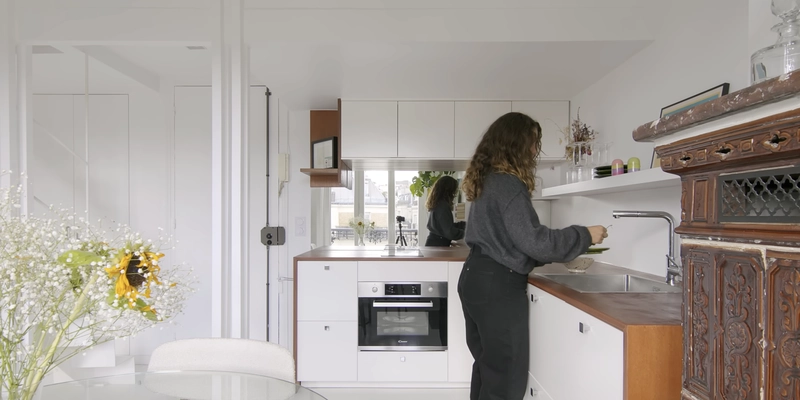
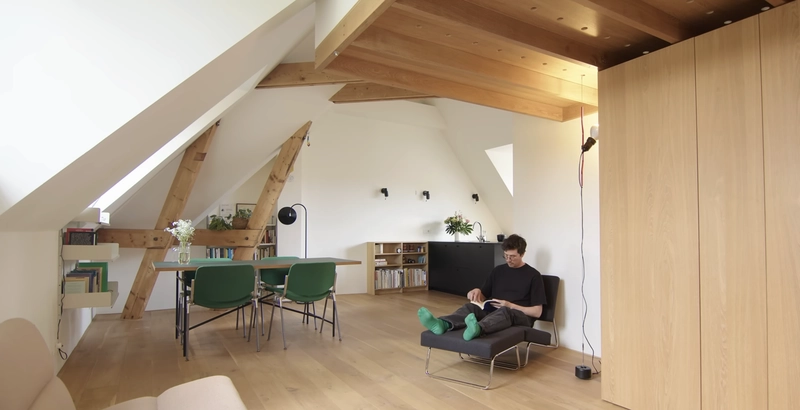
A prime example of this architectural shift can be found in the 18th arrondissement of Paris, a lively neighborhood near Montmartre. Here, a 19th-century Haussmann building houses a 25-square-meter micro loft that recently underwent a radical transformation. Designed by Sarah and Pauline Pradi for Léonard, a book reviewer and podcaster, the apartment serves as a “quiet place surrounded by books” and a playful home for Léonard and his young son.
Before the renovation, the flat was an unoptimized studio with a hidden kitchen and bulky mezzanine ladders that disrupted the flow of the living area. Today, it represents a new wave of design where every square meter is optimized to provide both “space and comfort”.
The Psychology of Light and Color
To combat the constraints of a small footprint, modern designers are increasingly turning to visual tricks to expand the perceived volume of a room. In Léonard’s home, the designers used white on the floors and walls to make the space feel brighter and to provide a neutral backdrop that highlights his extensive book collection and select vintage furniture.
“We wanted to highlight the views of the sky and Paris rooftops,” the designers explained, noting that they replaced old kitchen tiles with parquet flooring to create a seamless, cohesive look. In the bathroom, where there is no window, large mirrors were installed to expand the space visually, contrasting with deep blue mosaic glass tiles.
Furniture as Architecture
In the modern urban home, furniture is no longer just a set of objects; it is an extension of the architecture itself. To save space, traditional desks are being replaced by custom-built, multi-functional pieces.
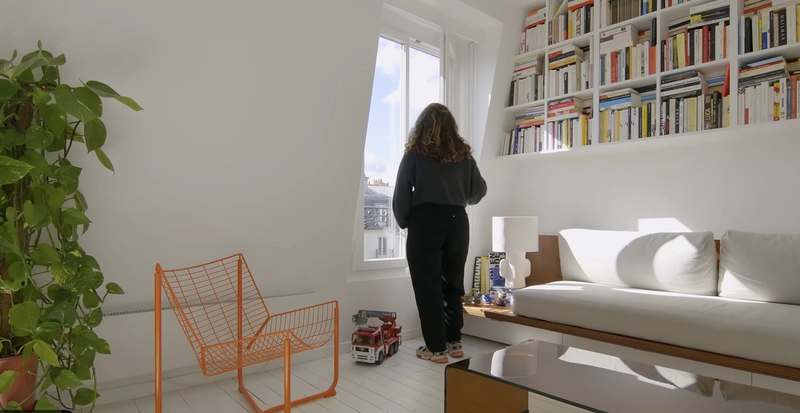
• The Custom Daybed: A large birch plywood couch serves as both a seating area and a guest bed. It even features a custom-designed cushion at one end so the owner can comfortably enjoy views of Paris from the sofa.
• The Sculptural Staircase: Replacing the old ladders is a thin, metal staircase designed to be a “masterpiece” or “piece of art” that occupies minimal circulation space.
• Integrated Storage: Bookshelves are tucked into support beams, and wardrobes are hidden behind joinery doors to maintain a clutter-free environment.
Designing for the Next Generation
One of the most significant shifts in modern living is the inclusion of whimsical, dedicated spaces for children within small urban footprints. For Léonard’s son, the designers created a blue “nook” inspired by Alice in Wonderland. Accessible only through a tiny door—the largest they could create given the existing beams—the room is a playful “cabin” isolated with soundproof glass to ensure a quiet, imaginative space for a child to play.
The “Slow Living” Movement
This trend toward micro-living is part of a broader cultural movement focused on “living lighter” and finding “poetry in the everyday”. By choosing to do things differently—prioritizing views of Montmartre through oversized skylights over traditional room layouts—urban dwellers are proving that a small home can be “loaded with all the good things”.
As we look to the future, the concept of home is becoming less about status and more about a determination to do things differently, creating optimistic spaces that invite us to “pause, ponder, and smile”.